Read by Shane Morris-On April 23, 1910, a year after leaving his presidential office, Theodore Roosevelt gave what would become one of his greatest rhetorica.. The Famous Quote. It is not the critic who counts; not the man who points out how the strong man stumbles, or where the doer of deeds could have done them better. The credit belongs to the man who is actually in the arena, whose face is marred by dust and sweat and blood; who strives valiantly; who errs, who comes short again and again, because.
Man In The Arena Poster Theodore Roosevelt Etsy
The Man In The Arena Speech by Theodore Roosevelt Poster Shark Printables
8 x 10 The man in the arena Theodore Roosevelt poem Printable Etsy

The Man In The Arena Meaning Theodore Roosevelt Quotes Ageless Investing

The Man In The Arena by Teddy Roosevelt Classic Design on Gray Linen Painting by Desiderata

The Man in The Arena Framed Print Roosevelt Print Roosevelt Man in The Arena Roosevelt Quote

The Man in the Arena Printable Wall Art Theodore Roosevelt Etsy
Man in the arena Inspiring Poem Print Inspirational Office Etsy
The Man in the Arena Quote by Theodore Roosevelt Printable Etsy

Rudyard Kipling Jungle Book, If Rudyard Kipling, Motivational Poems, Inspirational Quotes, Epic

The Man In The Arena Quote by Theodore Roosevelt Poster Zazzle

The Man In The Arena by Theodore Roosevelt Literary Quote Etsy
The Man in the Arena Quote by Theodore Roosevelt Printable Etsy

Buy Daring Greatly, Woman in the Arena The Man in the Arena Quote by Theodore Roosevelt Art

Printable The Man In The Arena
The Man in the Arena, Daring Greatly Quote by Theodore Roosevelt Poster by EK Art Prints Society6

The Man in the Arena Poem by Theodore Roosevelt Art Print Etsy
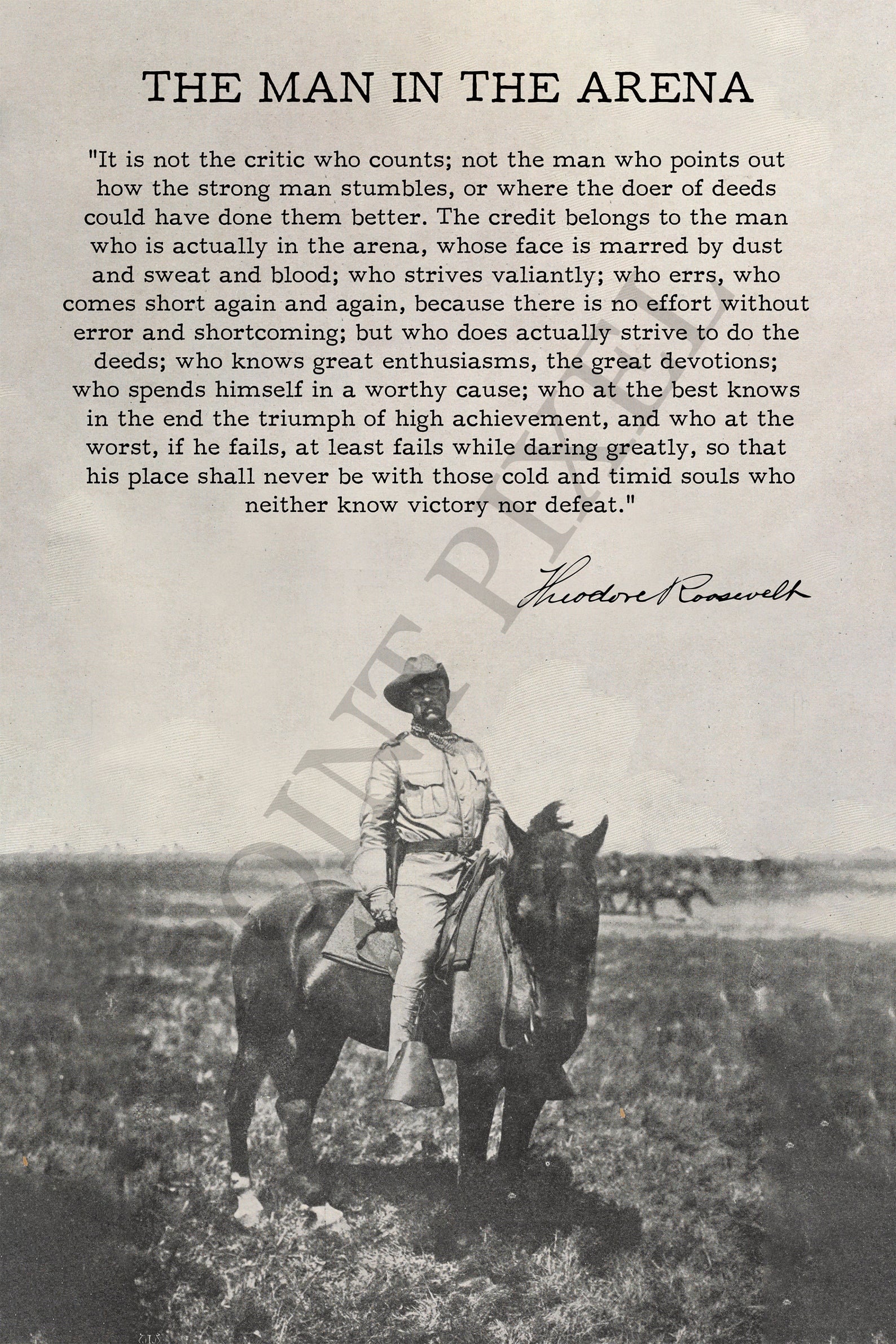
Man in the Arena by Theodore Roosevelt Poster Print Etsy
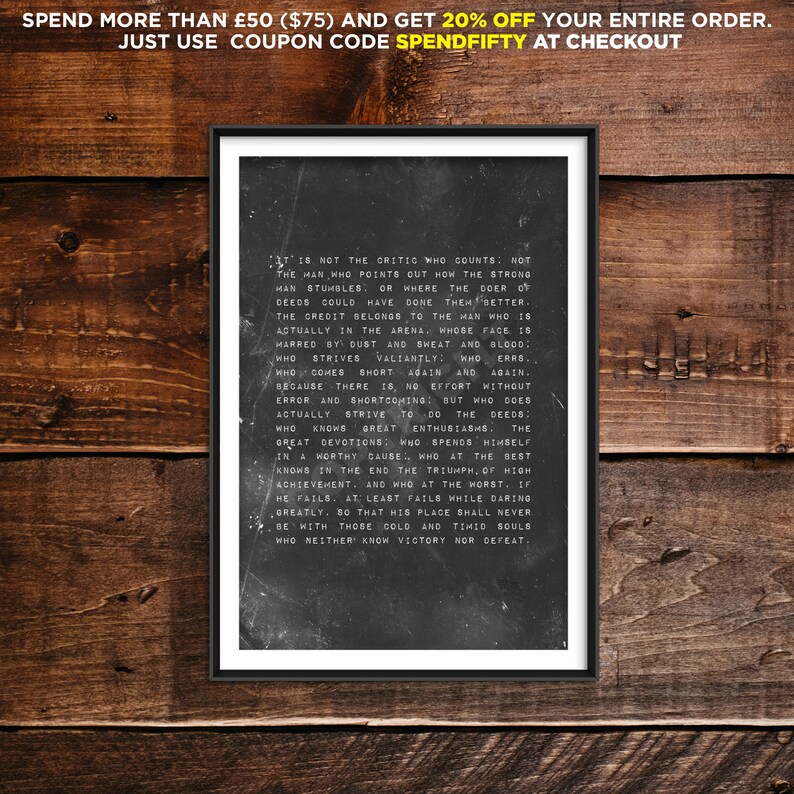
The Man in the Arena Poem by Theodore Roosevelt Art Print Etsy

“The man in the arena” Poster , words by Theodore Roosevelt Photographic Print by Irisangel
The credit belongs to the man who is actually in the arena, whose face is marred with sweat and dust and blood; who strives valiantly; who errs and comes short again and again; who knows the great enthusiasms, the great devotions, and spends himself in a worthy cause; who, if he wins, knows the triumph of. The speech is popularly known as “The Man in the Arena.”. His statements at the Sorbonne were part of a larger trip to Europe that also included visits to Vienna, Budapest, and Oslo. On May 5, 1910, he gave his Nobel Prize speech. This trip came in the midst of Roosevelt’s frustration with the Taft administration and followed his African.
